CTFC publishes a manual on the use of decomposer fungi to remove forest stumps in a sustainable way

Originally published on the CTFC website in Catalan.

The Centre for Forest Science and Technology of Catalonia (CTFC) has published a new manual on the sustainable management of the biological uprooting of forest species with decomposing fungi, prepared within the framework of the DESCOMPFONGS demonstration action, an activity co-financed by the European Union through intervention 7201 of the Strategic Plan of the Common Agricultural Policy (CAP) 2023-2027. The initiative addresses the need for alternatives to conventional strain management techniques in poplar plantations, which disturb soils and aquifers and affect local biodiversity.

After using wood from a poplar plantation, it is necessary to control stump regrowth. Traditional management involves the use of heavy machinery or chemicals, with negative effects on soil, water and ecosystems. For this reason, decomposers represent a natural alternative: they are organisms capable of biologically degrading wood, thereby reducing reliance on aggressive mechanical techniques and chemicals.

The manual includes the methodology used and the results obtained from several experimental plots at the Escarp i Serós Farm, where this management technique has been tested. The document is available in digital format on the CTFC website and is aimed at technicians, forest managers and plantation owners who want to adopt more sustainable, environmentally friendly management practices.

Featured image: Andreas Ebner / Pexels

​Open Call to support primary producers’ participation in the Bioeconomy Bootcamp

​The BIOECONOMY GIANTS project is pleased to announce the official launch of its Open Call I on June 1st 2026, aimed at supporting primary producers across Europe through travel vouchers that will enable their participation in the BIOECONOMY GIANTS Bioeconomy Bootcamp, organised within the “Pitch Perfect and Boost the European Bioeconomy” event.

​About the Bioeconomy Bootcamp

​The Bioeconomy Bootcamp will provide participants with the opportunity to:

  • ​Access cutting-edge knowledge and innovative solutions in the bioeconomy sector
  • ​Network with industry actors, clusters, researchers, and innovation stakeholders
  • ​Explore future collaboration opportunities within the BIOECONOMY GIANTS ecosystem

​Who can apply?

​The Open Call is addressed to:

  • ​Farmers and agricultural producers
  • ​Forestry producers
  • ​Cooperatives of primary producers
  • ​Other organisations representing primary production activities

​Applicants must be able to participate in English.

​Funding support

​Through Open Call I, BIOECONOMY GIANTS will provide travel vouchers of €500 per participant to support participation in the Bioeconomy Bootcamp. ​In total, 40 vouchers will be available, corresponding to a total budget of €20,000. ​This support aims to reduce barriers to participation and facilitate the active involvement of primary producers in European bioeconomy networking, sustainability initiatives, and collaborative opportunities.

Full application details and supporting documents are available at the BIOECONOMY GIANTS website.

​Info Day: guidance for applicants

​To support potential applicants, an Info Day will take place on 15 June 2026 (10:00–11:00 CET). ​Participants will receive detailed information on:

  • ​The objectives of Open Call I
  • ​The Bioeconomy Bootcamp programme
  • ​Eligibility and evaluation criteria
  • ​The application and selection process for travel vouchers
  • ​The session will conclude with a Q&A segment, allowing direct interaction with consortium partners

​About BIOECONOMY GIANTS

​BIOECONOMY GIANTS aims to unlock the potential of Europe’s unutilised biomass by integrating primary producers and other rural actors into the bioeconomy value chain, promoting cooperative and circular bio-based business models (CCBBMs), and fostering new forms of collaboration between rural actors and bio-based industries.

​The ultimate goal is to create a more sustainable, prosperous, and competitive bioeconomy in which primary producers play a central role in driving innovation and value creation.

​The project is supported by the Circular Bio-based Europe Joint Undertaking (CBE JU) and its members and is funded by the European Union.​

Open call: Bridging forest bioeconomy innovators and finance

Are you developing a forest bioeconomy project with strong potential and looking to finance the next step?

A new opportunity is now open for European forest bioeconomy innovators and project developers seeking expert feedback on bankability and next steps toward attracting public or private finance.

Supporting forest bioeconomy innovators on their investment journey

The Forest Bioeconomy Investment Accelerator (FBIA) is a focused, high-level initiative designed to help innovative forest and bioeconomy-related projects strengthen their investment readiness and financing prospects.

Organised by the European Investment Bank Group (EIB Group), the European Forest Institute (EFI), and the EFI Bioregions, the Accelerator responds to a growing demand for more hands-on exchanges between project developers and investment experts.

Open call for projects

FBIA invites applications from forest and wider bioeconomy projects at Technology Readiness Level (TRL) 6 or above, which are willing to engage in focused discussions on finance and investment readiness.

Eligible projects may cover areas such as sustainable forestry, forest restoration, climate adaptation, nature-based solutions, ecosystem services, circular bio-based value chains, innovative wood-based materials, and forest project aggregation and investment platforms.

Selected projects will

  • receive structured feedback from EIB Group experts and financial practitioners on bankability and investment readiness;
  • gain insights into EIB eligibility criteria and financing instruments; and
  • connect with a growing community of forest bioeconomy innovators and financiers.

Approximately 10 projects will be selected to pitch their work at the FBIA event. A limited number of projects may be considered for follow-up advisory support, depending on their maturity and alignment with EIB advisory instruments.

Check out the open call website for further details on thematic focus, investment orientation, eligibility and participation.

Interested parties can attend an information webinar on 20 May 2026 to learn more about the process and ask questions before submitting their applications by 12 June 2026.

About the Forest Bioeconomy Investment Accelerator (FBIA) event

The one-day FBIA event will take place on 25 November 2026 at the EIB office in Brussels and is by invitation only. The event will bring together selected project developers and invited stakeholders from across Europe’s bioeconomy and finance ecosystem for project presentations, expert discussions, and shared learning on investment pathways.

For questions or to express interest in receiving the outcomes of the FBIA event or in attending, please contact us at bioregions @ efi.int.

Responsible future of wood use discussed at the 10th Karelia Symposium at the University of Eastern Finland

Authors: Dr. Henrik Heräjärvi and Satu Helenius

The 10th Karelia Symposium: Responsible Future of Wood Use took place on April 16 2026, at the University of Eastern Finland (UEF) in Joensuu. Supported by the Teollisuusneuvos Heikki Väänänen’s Fund and co‑funded by the European Union, the symposium brought together researchers, students, industry representatives, and policymakers to explore and discuss how wood-based value chains contribute to sustainability transition and responsibility questions.

The programme combined invited keynote presentations, a panel discussion, poster pitching, presentations by previous grant recipients, announcement of the 2026 grant recipient, and the Best Poster Award. Throughout the day, discussions were framed by responsibility, strong sustainability, circular bioeconomy solutions, and the need for cross-sectoral collaboration.

Erno Järvinen (Ministry of Agriculture and Forestry of Finland) is delivering the opening remarks, with Dr Henrik Heräjärvi as Chair of the Karelia Symposium. Picture by Jan Kunnas

From circular forest industries to strong sustainability

Keynote presentations addressed the transformation of forest-based industries in response to climate change, biodiversity loss, and evolving societal expectations driven by consumer awareness and normative guidance.

Professor Leena Aarikka‑Stenroos (Tampere University) examined pathways towards circular and low‑carbon forest-based industries, highlighting that technological innovation, business models, and societal acceptance must develop in parallel. She emphasised smart value chains, industrial symbiosis, and higher value creating solutions as key enablers of sustainable competitiveness.

An industry perspective was provided by CEO Mika Rytky (Kontiotuote Ltd.), who discussed sustainability as a critical success factor in the built environment. Log construction was presented as a long‑lasting carbon storage and a low‑emission alternative for the construction sector that is the largest greenhouse gas producing sector globally.

In a joint keynote, Dr. Anu Laakkonen and Katri Rusanen (University of Eastern Finland) explored the question “What is enough?” in the Finnish forest-based sector. Their presentation introduced strong sustainability, sufficiency, and regenerative thinking, stressing that economic activities should be embedded within planetary boundaries – a great challenge for humankind that currently consumes the resources of several planets. Forests were discussed as socio‑ecological systems that provide multiple values, including biodiversity, climate change mitigation, cultural meaning and human well‑being, alongside products and energy that reduce the need to use nonrenewable resources.

Panel discussion: Bridging responsibility gaps

The panel discussion, chaired by Sandra Lupien (University of Eastern Finland / Michigan State University), synthesised insights from the keynote talks. Discussion focused on how responsibility can be operationalised across forest-based value networks. Keynote speakers, supplemented by Dr. Kathryn Fernholz (Dovetail Partners, USA), ended up highlighting the need to clarify what responsible wood use means for practitioners.

Panel discussion featuring invited experts at the Karelia Symposium. Picture by Jan Kunnas

Key takeaways included the importance of radical cross‑sector collaboration, the recognition that much of the required knowledge and technology already exists, and the need to connect this knowledge into action through social licence, policies, and market demand. The discussion emphasised that sustainability should be de facto strong, with business value propositions centred on nature, planetary boundaries, and ethical paths for growth. Many woodworking companies, small and medium-sized in particular, already obey the rules of responsibility, while not necessarily even recognising it.

Posters, student research, and emerging solutions

Poster pitching and student presentations showcased a wide range of current research topics related to responsible wood use and forest bioeconomy at the UEF. These included biochar applications, indoor air quality in timber buildings, life‑cycle carbon impacts of end‑of‑life wood, biomass valorisation, use of bark beetle-damaged logs, and bio‑based alternatives to synthetic wood preservatives. Presentations by previous recipients of the Teollisuusneuvos Heikki Väänänen’s Fund illustrated the breadth and societal relevance of research supported through the fund.

Grant recipient and Best Poster Award

The symposium concluded with the announcement of the 2026 PhD grant recipient of the Teollisuusneuvos Heikki Väänänen’s Fund. The grant was awarded to Ville Oskari‑Komu for his research project “Cascade utilisation of idle forests – Enhancing the value of forests and forestry side streams through cultivation of Inonotus obliquus for spalted wood and nutraceuticals.”  The Best Poster Award – decided by audience votes – was presented to Viivi Berg for her poster “Birch wood and fibre hemp biochar – safe additives in bio‑based composites?”.

Concluding the symposium day

The 10th Karelia Symposium: Responsible Future of Wood Use conveyed a clear and shared conclusion: responsibility in wood-based value chains cannot be framed as incremental improvement, but requires fundamental rethinking of how value, growth, and sustainability are defined.

Across all presentations and discussions, participants highlighted that responsibility is not only a technical or efficiency question. Instead, it involves clarifying what “responsible” means in practice, recognising ecological, societal, and economic boundaries at the same time. Responsibility goes beyond the sustainability norms and regulations, involving a strong presence of ethics.

Overall, the Karelia Symposium underscored that achieving a responsible future for wood use is not the task of any single actor. It requires shared definitions, system‑level re-thinking and long‑term commitment.

Bioeconomy events across Europe in 2026 

The bioeconomy is gaining increasing attention across Europe. Following the launch of the renewed EU Bioeconomy Strategy in November 2025, the topic returns to the spotlight in 2026. 

Throughout the year, researchers, policymakers, practitioners and other key stakeholders will come together to discuss forest governance, bioeconomy innovation, future thinking and regional collaboration. 

Below is an ongoing list of bioeconomy-related events taking place in 2026.  

In addition, we will soon announce the Bioregions Facility’s 2026 event calendar. If you want to see all the events in chronological order, check out our website.

Wood 

Wood from Finland Conference 

4–5 February | Helsinki, Finland 

One of the most respected softwood conferences globally takes place in Helsinki, Finland. 

DACH+HOLZ International 

24–27 February | Cologne, Germany 

Experts – from roofers to architects – come together and network at the leading trade fair and online on the DACH+HOLZ platform, while discovering future trends and new products. Here you will find all the key information about the trade fair, the platform, highlights, and more. 

2nd International Wood BioEconomy Forum (WBE)

4–5 March | Rosenheim, Germany

The 2nd International Wood BioEconomy Forum (WBE) will take place at Rosenheim University of Applied Sciences, Germany.

Wood Day (Puupäivä) 

12 November | Helsinki, Finland 

The Wood Day event will take place in Helsinki, Finland. More information coming soon. 

Bio-based innovation 

BIO2REG Connect – Unlocking Regional Pathways for the Bioeconomy 

3 February | Brussels, Belgium 

BIO2REG supports European regions in accelerating their transition to a sustainable and circular bioeconomy. The event provides practical tools, guidance and peer-learning opportunities to discover how regions can bring bioeconomy solutions to life. 

Congrés BIT 2026

25–26 March | Vic, Spain

The fifth edition of the Congrés BIT, a leading congress in Catalonia for bioeconomy, innovation, and technology, has the theme “forest bioeconomy and agrifood.”

Global Bioeconomy Summit 2026 

20–21 October | Dublin, Ireland 

The event brings together political leaders, policymakers, industry leaders, researchers, investors, and civil society worldwide to accelerate sustainable, bio-based innovation and solutions. 

Sustainability, futures & systems thinking 

26th Futures Conference: Sustainability, Temporalities and Futures 

9–10 June | Turku, Finland 

An opportunity to meet, exchange, and debate current topics in futures studies and foresight. 

Young Leadership Programme: Future Forests, Future Leaders 

24–28 August | Joensuu, Finland 

EFI’s Young Leadership Programme (YLP) 2026 focuses on adding value locally, drawing on the example of Northern Europe, a region shaped by forests, knowledge and innovation, yet facing significant changes. 

Urban forestry 

Global Summit: Advancing sustainable forest-based bioeconomy approaches 

23–25 February | Online and Vienna, Austria 

Austria is hosting the United Nations Forum on Forests (UNFF) Country and Organisation-Led Initiative (COLI) Global Summit: Advancing Sustainable Forest-based Bioeconomy Approaches. The event brings together leaders from government, science, industry, civil society, and Major Groups to advance innovative and inclusive bioeconomy solutions that put sustainable forest management at the core. 

European Forum on Urban Forestry 

26–29 May | Mälmö, Sweden 

The EFUF2026 overall theme is Diversity in Urban Forestry – Bringing People, Trees and Ideas Together. EFUF2026 is open to all interested in urban forest management, policy, planning and decision-making. EFI is one of the co-organisers of this event. 

19th European Congress (FOGE)

7–8 October | Cologne, Germany

The event will focus on efficient construction with wood in urban areas.

Forest-based industries 

Iberoamerican Congress on Pulp and Paper Research (CIADICYP) 2026 

7–10 July | Graz, Austria

This edition focuses on “Bridging Biomass and Innovation – The Future of Pulp, Paper and Beyond,” aiming to connect the diverse ecosystems within the sector and across continents.

Featured image: Towfiqu barbhuiya from Pexels 

Bioeconomy Innovation Day 2025: advancing bio-based innovation across key sectors

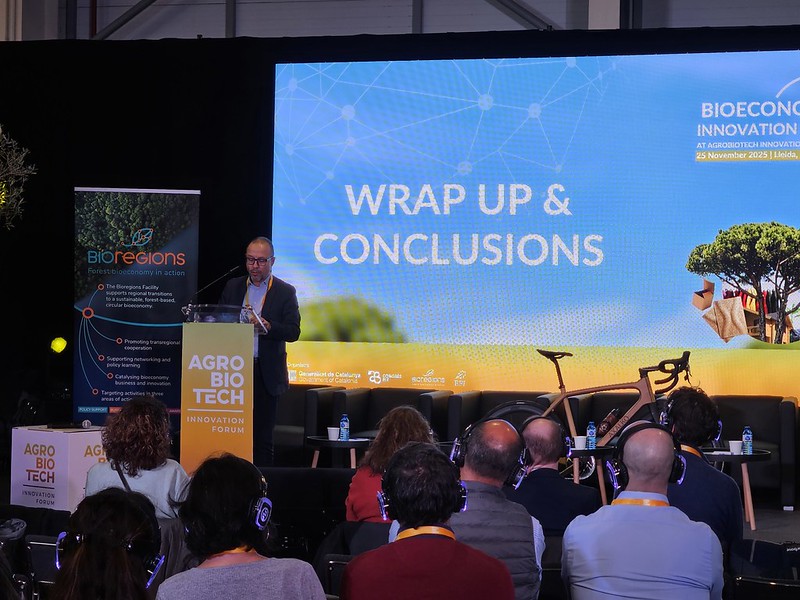
On 25 November, the Bioeconomy Innovation Day 2025, hosted at the AgroBioTech Forum in Lleida, Catalonia, Spain, brought together innovators, industry leaders, investors, and researchers to explore how bio-based materials and circular solutions can drive the biologisation of high-impact sectors such as construction, manufacturing, cosmetics, and interior design.

The programme combined high-level keynotes, sector-focused pitch sessions, and real-time investor feedback after each pitch, creating a dynamic exchange between vision, innovation, and finance.

Opening the event, EFI’s Inazio Martinez de Arano challenged participants with a central question:

“How can we use our existing biomass to deliver both environmental benefits and social value?”

Inazio Martinez, Bioeconomy Innovation Day 2025

Opening keynotes: regional vision and support for the bioeconomy

Building on this challenge, the opening keynotes set the stage with a strong regional vision for the bioeconomy. Cristina Massot, Secretary General of the Department of Agriculture, Livestock, Fisheries and Food at the Government of Catalonia, outlined how the region is embedding the bioeconomy into long-term economic planning, describing it as “a driving force for the Catalan economy.”

She presented the three-year Bioeconomy Action Plan 2025–2027, equipped with a €269 million budget and 44 actions that prioritise improved forest management, the valorisation of organic and agri-food side-streams, and the creation of resilient agroforestry landscapes. She emphasised that this is now a whole-of-government commitment:

“This is serious. Not only for our department, but also for the Government of Catalonia.”

The second keynote, delivered by BioHubCat and Simbiosy, highlighted the importance of strengthening Catalonia’s support ecosystem for bioeconomy innovation. BioHubCat, Catalonia’s coordination hub for the circular bioeconomy, connects companies with public services, fills system gaps, and helps start-ups overcome technical and administrative challenges.

“Our role is on the ground, helping each company step by step so they can become competitive,” they noted.

Simbiosy, a consultancy specialising in industrial symbiosis and circular economy strategies, stressed that bioeconomy projects are inherently systemic and require collaboration across multiple actors.

They introduced the BioBoost accelerator, which reduces investment risk and supports start-ups with legal, financial, technological, and facilitation services.

“Every systemic project needs facilitation to actually happen,” they emphasised.

Maria Dolors Nunez, ACCIÓ

Investor panel: market opportunities and the realities of scaling

With a strong regional vision established, the discussion shifted to the financial realities of scaling bio-based innovation. The investor session provided a candid look at the opportunities and challenges facing bio-based ventures.

Michael Brandkamp of the European Circular Bioeconomy Fund stressed that “the bioeconomy is not just an option; it is a must”, driven by shifting consumer demand, policy pressure and climate-related risks.

However, he highlighted key challenges for start-ups, including competition for feedstocks, complex R&D, and the need to validate real customer demand.

“Most innovations fail not because of technology but because they solve a problem nobody has validated,” he remarked.

Jan Debets from META Group emphasised the challenges faced by research-driven ventures, noting that university spin-outs are “high-risk because researchers often fall in love with their science and forget about the customer”.

As a research accelerator, META focuses on helping science-based start-ups navigate this gap between technology and market needs. Debets also highlighted that, as the bio-based sector matures, investors are increasingly open to backing these ventures.

Session 1: Bio-based construction

With these themes in mind, the opening pitch session demonstrated practical ways to apply bio-based construction. It began with a keynote from the Institute for Advanced Architecture of Catalonia (IAAC), where Olly Needham presented their work on full-cycle timber construction.

As a “laboratory for self-sufficient habitat”, they demonstrated how forest stewardship and architecture can be deeply intertwined by managing pine forests, selectively harvesting trees, and ensuring full traceability from woodland to building.

“Traceability is essential if we want to understand the real impact of the materials we use,” he noted, highlighting how their approach connects local forests directly to sustainable buildings.

This keynote was followed by four innovation pitches that highlighted a diverse set of bio-based construction solutions.

  • ParaStruct presented a carbon-sink subfloor made from mineral binders and plant residues, offering a cost-competitive alternative to cement.
  • Sebastia showed how locally sourced Pyrenean timber can be turned into cross-laminated timber panels that store carbon effectively and support improved forest management.
  • RMT Insulation introduced wool- and cotton-based materials for building insulation and green roofs, combining affordability with biodegradability.
  • Czech University of Life Sciences Prague demonstrated mycelium-based panels made from recycled wood, which provide strong insulation and even help break down contaminants.

Together, the pitches showed how biological materials can advance low-carbon construction while facing shared hurdles such as certification, feedstock availability and scaling.

Session 2: A bio-based way of life

Attention shifted to a bio-based way of life, highlighting innovations that bring sustainability into daily routines and consumer choices. Ricard Armengol, CEO at Provital, opened the second session by unpacking fast-evolving trends in the cosmetics sector, where well-being, scientific evidence, and sustainability increasingly shape consumer expectations. Provital, a global cosmetics ingredient manufacturer based in Catalonia, specialising in natural, sustainable solutions for skin and hair care, stressed that today’s consumers are highly informed and demand transparency: products must not only claim benefits but demonstrate the science behind them. Sustainability, once a niche, is now a dominant driver of innovation.

Provital also highlighted a critical challenge for ingredient suppliers: branding is no longer optional. Even in a B2B context, where raw materials have a limited market, strong branding is essential to avoid being easily substituted.

“If you don’t build a brand, someone else will,” Armengol warned, urging companies to know their customers deeply and tailor products to real needs in a fragmented market.

The pitches showcased how bio-based innovations are entering lifestyle, beauty, and design markets:

  • Roka Furadada demonstrated how lignin, a widely available forestry by-product, can be upcycled into multifunctional cosmetic actives for skin and hair care, replacing fossil-derived ingredients.
  • Boreal Bioproducts presented its water-based, zero-waste process for extracting biochemicals from sawdust and bark, producing lignin, tannins, and sugars for applications ranging from cosmetics to animal nutrition.
  • Bagaceira introduced an acoustic panel system made from sugarcane bagasse, combining aesthetic design with high sound absorption and carbon storage.

All innovators emphasised the circular use of residues, from forestry side-streams to sugarcane by-products, and the growing demand for high-performance, sustainable alternatives in consumer-facing sectors.

Session 3: Bio-based solutions for sustainable manufacturing

The day concluded with a session on manufacturing, the backbone of industrial transformation. A keynote was given by Maria Dolors Nuñez, Head of Technology Opportunity Analysis at ACCIÓ, Catalonia’s agency for business competitiveness and innovation, emphasising that biomaterials are not just part of the solution; they are key enablers for building more sustainable and competitive manufacturing systems.

“Bio-based materials redefine how we design, produce, and reuse,” she noted, positioning them as drivers of innovation and industrial resilience.

Catalonia’s strong ecosystem, spanning research centres, universities, companies, clusters, and institutional support, offers a fertile ground for emerging value chains and industrial symbiosis. However, ACCIÓ stressed that scaling up, securing investment, and harmonising standards remain critical challenges. Linking research with industry and fostering hybrid knowledge across sectors is essential to unlock these opportunities and make Catalonia a European leader in the bioeconomy.

This final session featured innovations in advanced composites and circular materials for mobility, wind energy and urban infrastructures:

  • Voodin Blade Technology showcased wooden wind turbine blades made from laminated veneer lumber, offering lower cost and carbon impact with a licensing model for scale-up.
  • Alcorke Playground presented flooring made from upcycled cork stoppers, turning industry waste into renewable playground materials.
  • Advanced BioComposites (ABC) introduced lightweight biocomposites as strong as aluminium for buses, trains and industrial components, providing recyclable, low-carbon alternatives.

These pitches signal new pathways for renewable materials to reshape manufacturing and reduce environmental impact.

Bioeconomy Innovation Day 2025

Concluding remarks

The Bioeconomy Innovation Day 2025 underscored a clear message: bio-based materials are no longer niche; they are strategic enablers of sustainability, competitiveness and resilience.

Across keynotes and pitches, speakers highlighted the need for systemic collaboration, strong branding, and new business models to scale innovation. Investors stressed that while policy and consumer trends create momentum, success depends on proving real market demand and bridging the gap between research and commercial viability.

Closing the event, Salvador Samitier of the Department of Agriculture, Livestock, Fisheries and Food at the Government of Catalonia, reminded participants that the bioeconomy is not just a sector but a vision for how society can live with nature. It has the potential to offer economic opportunities, particularly for rural areas, while supporting ecosystem restoration and resilience.

Read all factsheets

The Solsonès Forestry Hub is born to manage forests and give value to Mediterranean wood

The Forestry Hub of Catalonia is an initiative supporting innovation in forestry value chains. Its facilities for research, development, transfer, facilitation and training focus on using wood for: construction, textiles and biochemistry, aromatic and medicinal plants for pharma and cosmetics, and truffles and other non-wood forest products (NWFP) for food.

For some time now, the mantra has been circulating that our forests do not produce high-quality wood suitable for making splinters. But this is not true. It is also useful for other uses, such as the construction of wooden houses. A key point to increase forest management, which is expensive and difficult for owners to assume if they do not get a return on it.

“And forestry, management, has proven to be one of the most powerful tools to transform the landscape and fight against the impacts of climate change, such as droughts.” This is explained by Mario Beltran, a technician at the Centre for Forest Science and Technology of Catalonia (CTFC).

The pines that they have removed after managing in a forest in Llobera, in the Solsonès region, are taken to the Olius Forest Hub, a few kilometres away. It is a laboratory that conducts tests and trials on wood, but on an industrial scale. Thus, “we can give the construction recipes with different types of wood to the industry because we have tried it before here.”

The building is 1,200 square meters. And it is built, obviously, with wood, with fir and black pine from the Pyrenees. When we enter, the temperature is comfortable, although they do not have heating. Wood acts as a thermal insulator.

In the warehouse, the machines manufacture structural panels. They have combined different Mediterranean woods, such as Aleppo pine and beech, which are very resistant, but which have never been used in construction.

Learn more

Read our innovation factsheet on CTFC’s Forestry Hub of Catalonia by clicking the button below.

Bioeconomy Regions Summit 2025: regional bioeconomy solutions for EU policy ambitions

On 23 October 2025, the Bioeconomy Regions Summit gathered 100 participants from 40 European regions, representing regional governments, research and academia, regional networks and initiatives, European institutes, the private sector, NGOs and more, to exchange knowledge and discuss how regions can turn bioeconomy ambitions into action.

Here’s a summary of what happened:

Place-based bioeconomy transitions

The event opened with a video message from Silke Gorißen, Minister of Agriculture and Consumer Protection of North Rhine-Westphalia, Germany, one of the Bioregions Facility’s founding members. In her remarks, she highlighted the strong partnership between EFI, the Facility, and North Rhine-Westphalia, and referred to the Bioregions: Five Years of Impact report, which showcases how the forest-based bioeconomy supports the green transition.

The event continued with two lessons learned related to the ambitions of place-based bioeconomy transitions in Spain.

Cristina Massot, Secretary General of the Department of Agriculture, Livestock, Fisheries and Food, Catalonia, described progress on the region’s Bioeconomy Strategy. Having implemented its first action plan last year, Catalonia is now developing the second phase.

“Our bioeconomy strategy has become an umbrella for all government projects – it’s now part of the wider plan for managing the whole territory,” she says.

The aim is to improve the situation and reduce the risk of wildfires, which is one of the main problems in the region.

Watch Cristina’s interview explaining more about the Bioeconomy Strategy in Catalonia.

Moreover, José Almodóvar Aráez, Deputy Minister of the Environment for Castilla-La Mancha, introduced the region’s Bioeconomy Strategy to the audience. One of Castilla-La Mancha’s goals is to foster sustainable forest management, which is essential to maintaining the health of Mediterranean forests and preventing wildfires.

“We want to give more value to the ecosystem services to tip the scales. The goal is to upscale all the forest management across all our forests – not only public forests, but private ones as well,” he added.

The region created an agreement called “Alianza por los Servicios de los Ecosystemas or Alliance for Ecosystem Services”, which brings together forest owners, villages, public administrations, and companies with corporate social responsibilities.

Silke Gorißen, Minister of Agriculture and Consumer Protection of North Rhine-Westphalia
Cristina Massot, Secretary General of the Department of Agriculture, Livestock, Fisheries and Food, Catalonia
José Almodóvar Aráez, Deputy Minister of the Environment from Castilla-La Mancha
Virginia Puzzolo, Head of Programme, CBE JU
Kirill Dimanopoulos, Project Adviser, European Innovation Council and SMEs Executive Agency

Funding regional bioeconomy initiatives in Europe

Building on the progress made through regional bioeconomy strategies, the next step is securing the resources to turn these plans into tangible results.

Across Europe, funding programmes such as the Circular Bio-based Europe Joint Undertaking (CBE JU) and the European Innovation Council (EIC) play a central role in supporting regional initiatives, from developing innovative bio-based materials to scaling up circular solutions.

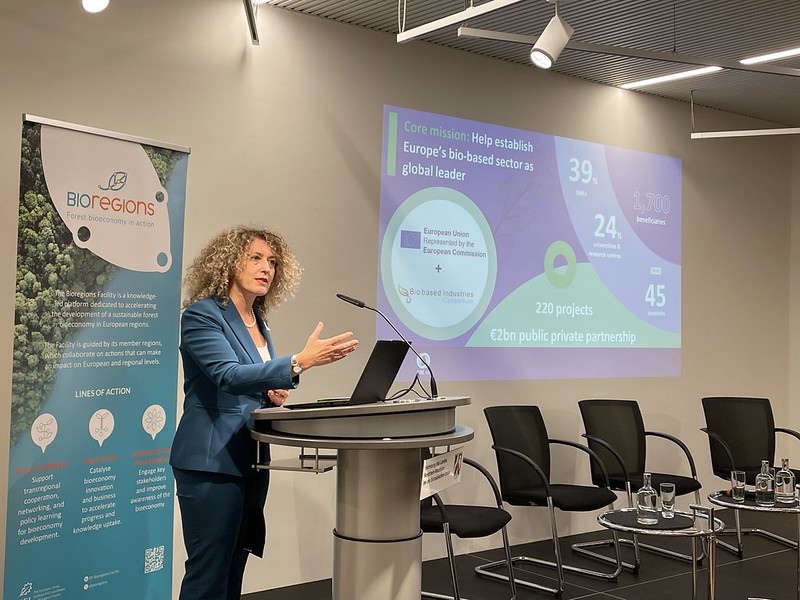
Virginia Puzzolo, Head of Programme, CBE JU, explained how CBE JU helps establish Europe’s bio-based sector. Even though regions cannot benefit from their programme, they can ensure that companies inside their territories benefit from European mechanisms.

One action to create synergies between the CBE JU and EU regions is to establish regional platforms to connect CBE JU with regional funding authorities interested in advancing bioeconomy solutions in their regions. The role of the region becomes one of facilitating access, supporting companies, and ensuring long-term growth and sustainability.

“You can have political willingness, but we need to bring willingness together with reality, to take research out of the lab and scale it up,” she said

In addition, Kirill Dimanopoulos, Project Adviser at the European Innovation Council and the SMEs Executive Agency (EISMEA), presented Interregional Innovation Investments (I3), which provides capacity-building and investment.

I3 instrument thematic areas are digital transition, green transition, and smart manufacturing. Regarding project focus, bioeconomy appears among the strongest investment areas so far – it cuts across many other priorities.

“50% of project funding goes to less developed regions. That’s how we ensure a strong interregional balance,” he added.

DJI_20251023_125032_077

Preserving our natural capital

This next session focused on forests, soils, and water, vital natural resources at the heart of the bioeconomy.

Bart Muys, Full Professor and Head of the Forest, Nature and Landscape Unit at KU Leuven, discussed climate-smart forestry to manage mixed forests sustainably while contributing to the circular bioeconomy.

“From the moment biomass becomes a valuable commodity, we need to be ready with sustainable management plans,” he said. Climate-smart forestry is an approach that fosters mixed forests in support of the circular bioeconomy.

Lars Kristian Selbekk, Halden River Sub-district Manager, shared insights from Norway’s long-term water management of the Halden-Canal river system. He showcased how peatland restoration can support flood prevention, carbon storage, and ecosystem recovery, while also highlighting the challenges posed by fragmented land ownership.

Bart Meuleman, Project Manager,  NatuurInvest, presented the Flemish National Park Brabantse Wouden as a platform for circular wood. The initiative promotes local, climate-robust timber and aims to reduce dependence on imported wood.

“We export nearly everything we cut and import what we actually use – that needs to change,” he said. By emphasising locally produced wood, the region reduces import dependence, improves local circularity, and increases economic value locally.

From Italy, Valentino Marini Govigli, Assistant Professor, Department of Agricultural and Food Sciences, University of Bologna, discussed reducing trade-offs among forest ecosystem services through a land-sparing approach. He explained how the region of Emilia-Romagna is developing its Regional Forest Plan 2.0 under the ARCADIA project to support multifunctional forestry.

“Italy uses a lot of wood, but most of it comes from imports – we must unlock our local forest potential,” he added.

DJI_20251023_150229_006

Scaling up bioeconomy innovation in European regions

This session focused on how European regions are driving bioeconomy innovation from research to market, highlighting approaches to strengthen regional competitiveness and create lasting impact.

Sven Wydra, Head of Business Unit Bioeconomy and Life Sciences at the Fraunhofer Institute for Systems and Innovation Research, outlined the challenges and opportunities for scaling up bio-based innovations in Europe. He emphasised that while Europe has an extensive network of pilot and demonstration facilities, financing and market uncertainties still slow down the progress. Upscaling requires significant investments, new processes, and better coordination between the regional and EU levels.

“Future-proof regions will be those that connect sectors, build resilience, and use their local resources wisely,” he said.

From the Netherlands, Angèle Liaigre, Senior EU Advisor for Cities Northern Netherlands, presented Circular Friesland and the region’s pioneering efforts in bio-based construction. Over 40 projects across Friesland are already using timber-frame and bio-based insulation methods, supported by the Frisian Hemp Deal, which aims to establish a full local value chain from cultivation to processing.

“Scaling up bio-based materials in construction starts with stimulating demand, and public procurement is a powerful tool,” Liaigre noted.

Markku Pyykkönen and Anne Kokkonen from the City of Joensuu highlighted Forest Joensuu, a globally recognised innovation ecosystem bringing together more than 600 companies, research institutes, and education providers. The initiative fosters open collaboration between public organisations and businesses, supports technology pilots, and promotes Joensuu as the “Forest Capital of Europe.”

“We built our innovation ecosystem on openness, collaboration and information sharing are at its core,” they said.

Finally, Gorka Altuna, Head of Development of Bioeconomy Projects at HAZI Foundation, showcased how the Basque Country positions bioeconomy as a driver of sustainable competitiveness. Through the Basque Circular Economy and Bioeconomy Plan 2020–2024, the region promotes eco-design, industrial symbiosis, and local innovation. In Enkarterri, a public-private hub supports projects such as nanocellulose manufacturing and the recovery of plastic waste from pulp and paper industries.

“Change starts locally. When one community embraces the bioeconomy, others follow,” he said. Together, the presentations underscored that scaling up innovation depends on long-term investment, collaboration, and strong regional ecosystems that link policy, research, and industry.

Call for collaboration 

The summit concluded with a strong call for collaboration among European regions and networks to accelerate the bioeconomy transition. Speakers highlighted the importance of connecting regional actors through joint initiatives, shared learning, and innovation alliances that bring together research, policy, and business.

Learn more about them:

The Bioregions Facility is an inter-regional, knowledge-led platform dedicated to accelerating the development of a sustainable forest bioeconomy in European regions. Our lines of action are policy learning, innovation and awareness and engagement.

Siebe Briers, Bioregions Facility, Bioeconomy Regions Summit 2025
DJI_20251023_160654_419

ERIAFF is the European Regions for Innovation in Agriculture, Food and Forestry, currently with 52 members and 40 observers from 18 EU member states and Norway and the UK. ERIAFF’s working groups focus on agroecology, bioeconomy and resilience, communication, forested regions and more.

The European Regions Research and Innovation Network (ERRIN) has a mission to bring a place-based perspective to EU research and innovation policy and programmes. The network has 120 regional stakeholder organisations. One of their working groups is natural resources and adaptation, which focuses on blue economy, bioeconomy and climate adaptation.

Gianpiero Petruzziello, ERRIN, Bioeconomy Regions Summit 2025
DJI_20251023_160246_679

Vanguard Initiative network has 33 regional governments and development agencies around Europe. The focus on innovation funding, innovation platforms on key transitions, and EU policy intelligence. The network collaborates in bioaromatics, lignocellulosic biorefinery, liquified bio-methane, and biopolymers.

ACR+ is an international network supporting the transition to the circular economy in cities and regions. Currently, they have more than 90 members across 23 countries in the EU.  They provide members with concrete tools and approaches to enact the transition towards waste-free circular systems in their territories and beyond.

Anita Lombardo, Project Officer, ACR+
DJI_20251023_162922_235

BIO2REG, a Horizon Europe project, helps regions transition to circular and systemic bioeconomy models by providing technical guidance and interregional cooperation opportunities.

BIOECONOMY GIANTS, Horizon Europe project with 18 partners in eight countries, promotes cooperative and circular bio-based business models and fosters innovative collaboration between rural actors and bio-based industries.

Tanja Meyer, Bio Base Europe, Bioeconomy Regions Summit
DJI_20251023_162429_897

BIOEAST acts as a bridge between EU policy and regional implementation, aligning national bioeconomy strategies with the European Green Deal and circular economy goals.

Learn more

A warm thank-you to our member regions who made this event possible, to all speakers, regional networks, and participants for contributing to the discussions.

Download all the presentations here and check out more photos of the summit here.

BIO2REG Exchange: Empowering regions to lead the bioeconomy transition

European regions seeking to shift from carbon-intensive sectors to sustainable, innovation-driven economies now have a new resource: the BIO2REG Exchange. The programme guides policymakers, innovation agencies, and cluster organisations in learning first-hand how to plan, fund, and implement a transition to a circular, bioeconomy.

“Transformation is never easy, but it becomes easier when regions learn from one another,” said Denise Gider, project coordinator of the BIO2REG project and responsible for the Exchange.

“By connecting regions that are at different stages of their bioeconomy transition and with complementary experiences — guided by the expertise of the BIO2REG consortium — the Exchange helps turn good practices into concrete actions for sustainable regional growth,” she adds.

Participants will leave with tailored bioeconomy action plans, hands-on insights, and practical expertise from other regions, Gider explained. A core element of the exchange will be site visits that enable emerging regions to experience mature regions’ best practices firsthand. Travel funding is available to support these visits.

“When regions visit each other, exchange openly, and see solutions in action, ideas become tangible,” she added. “It’s inspiring to see how others tackle similar challenges in different contexts — and with expert mentoring and travel support, regions can adapt these insights to build a circular, sustainable bioeconomy based on their own strengths and conditions.”

The programme pairs regions at different stages of bioeconomy development, providing mentoring, collaborative planning, and access to a European network of peers.

Who can join?

Regional and local authorities, cluster organisations, innovation agencies, and research institutions in regions facing economic transition challenges — including coal, forestry, agriculture, fisheries, and pulp & paper sectors — are eligible. The application opened in October and will close on 13 November.

Originally published here.

Call opening soon: Catalonia’s Resilient agroforestry landscapes programme

Wildfires, pests, diseases, drought, and climate change are putting pressure on natural ecosystems. To address these challenges, it is necessary to develop sustainable landscapes that are more resilient.

The Government of Catalonia has recently launched the programme ‘Resilient agroforestry landscapes’, an initiative led by the regional government and supported by the Forest Science and Technology Centre of Catalonia (CTFC).

Until now, five pilot projects have been developed. The first of which was carried out in 2023 in the municipality of Soriguera, in Pallars Sobirà. In 2024, three more pilots were launched in Terres de l’Ebre, the Camprodon Valley in Ripollès, and the Carme Valley in Anoia. The fifth pilot is in Cerdanya.

Its primary objective is to promote collaborative projects that strengthen the resilience of agroforestry landscapes throughout Catalonia, enabling these territories to better adapt to social, economic, and environmental challenges.

The programme places a strong emphasis on multi-sectoral collaboration, participatory approaches, and stimulating local value creation. Among its fundamental goals are the development of multifunctional landscapes, the enhancement of ecosystem health and biodiversity, and support for the local bioeconomy, as well as the promotion of innovation within rural areas.

It is open to associations, cooperatives, small and medium-sized enterprises, local entities, and social economy organisations in the region. Each approved project must bring together at least four entities representing different sectors and formalise their cooperation through the creation of an “activating committee” responsible for coordinating actions and ensuring integrative, strategic management to address the challenges involved.

The projects will have a duration of three years, spanning the period 2026–2028, with a total budget allocation of €3 million.

The call for applications is expected to open before the end of this year. The size of the projects must cover at least 5,000 hectares and two municipalities. This program is promoted within the framework of the Bioeconomy Strategy of Catalonia 2030.

Featured image: imv from Getty Images Signature / edited in Canva

Recent & Upcoming North Rhine-Westphalia Events in Fall 2025

North Rhine-Westphalia, Germany, is at the centre of forest and bioeconomy innovation in 2025. From climate-adapted reforestation to timber construction and renewable materials, here are the highlights from recent and upcoming events across the region.

Wrap-Up DLG Forest Days (DLG-Waldtage)

12–14 September 2025 | Lichtenau/Westphalia

A major forestry trade fair showcasing the latest technologies, machinery, and practices in sustainable forest management. The event brought together professionals, forest owners, and industry players for live demonstrations and networking.

Hybrid Symposium “Wind Turbines made of Wood”

25 September 2025 | Zentrum HOLZ, Olsberg

Experts and industry stakeholders discuss the potential of wood as a construction material for wind energy systems. The event will highlight new concepts, material technologies and more.

Final Event: SUPERB Demonstration Region NRW

1 October 2025 | Arnsberg

Closing event of the SUPERB project in North Rhine-Westphalia, presenting results and perspectives on climate-adapted reforestation. The focus was on moving “from concept to practice” to ensure resilient forest landscapes.

18th European Congress (EBH) 2025: Efficient Urban Timber Construction

9–10 October 2025 | Gürzenich, Cologne

The event is a platform for architects, engineers, timber builders and all players in the construction industry to exchange views on current developments and innovative solutions in urban timber construction.

16th Arnsberg Forest Forum: “Forest and Society”

4 November 2025 | Arnsberg

This year’s Arnsberg Forest Forum will be dedicated to discussing the relationship between opportunities and challenges, social benefits and demands on the forest.

Workshop: Building Materials from Renewable Agricultural & Forestry Resources

11 November 2025 | Campus Klein-Altendorf, University of Bonn

The workshop approaches the topic from the perspective of agriculture and forestry and aims to demonstrate why there are interesting alternatives and multiple challenges with building materials made from renewable resources.

Hybrid Conference with Excursion: “From Calamity to Value Creation”

26 November 2025 | Zentrum HOLZ, Olsberg

This event addressed the storage, utilisation, and processing of timber following major forest damage events. Participants examined how to turn large-scale calamities into opportunities for value creation.

Bringing Bio-Based into Green Public Procurement: Lessons from Catalonia and Zeeland

Key insights Case study 1: Zeeland Case study 2: Catalonia Final thought

Read Offline

Download the report “Bringing bio-based into green public procurement.” Click the button below.

Listen

You can now explore the full report in an audio format. Press play to hear the content narrated from start to finish. In addition, we invite you to take a quick survey to share your experience – this will help us improve our future reports. Answer our survey.

Loading the Elevenlabs Text to Speech AudioNative Player…

Introduction

Public procurement is one of the most powerful tools governments have to shape markets and accelerate change. By integrating bio-based thinking into existing green public procurement (GPP) frameworks, public authorities can directly support climate goals, strengthen regional economies, and cut dependence on fossil-based inputs. Bio-based solutions, made from renewable resources, offer practical alternatives that directly help reduce emissions, close material loops, and replace virgin raw materials with circular ones.

At the bio-based public procurement training held in Barcelona, Spain, on 4 June 2025, co-organised by the Bioregions Facility and the Government of Catalonia, experts from the Province of Zeeland joined Catalan institutions to share practical experiences and strategies. The following six insights reflect what emerged from their combined perspectives:

Key Insights

Political will: Political leadership sets the mandate for procurement teams to prioritise sustainability and support the bioeconomy.

Early collaboration: Engaging all relevant stakeholders early in the process helps prevent delays and leads to more effective and sustainable outcomes.

Tools and training: The right tools, data, and training empower procurement teams to apply sustainability criteria with consistency and ease.

Pilot projects: Pilots provide space to test innovative materials and methods while building trust and learning from experience.

Monitoring: Measuring progress before, during, and after projects ensures impact is real, not just stated.

Innovative legal pathways: Adaptive legal frameworks make it possible to test new approaches without fear of procedural penalties.

1. Political Will Turns Goals into Action


Core idea: Political will is the foundation for scaling bio-based procurement. It provides the leadership, resources, and space for innovation needed to align procurement with broader sustainability goals. When this commitment is reflected across public administrations, from high-level strategies to operational decisions, it enables a consistent and coordinated shift toward sustainable procurement practices. 

Example:

  • In Zeeland, the “Comply or Explain” policy requires suppliers to choose sustainable materials by default. If they cannot, they must formally justify their choice. This creates a cultural shift where bio-based and circular solutions become the default, not the exception.
  • Catalonia’s Green Public Procurement Action Plan (2022–2025) demonstrates strong political and administrative will, with a clear target of reaching 50% green contracts. Surpassing this goal with 67% shows how defined objectives, backed by leadership, can support lasting implementation.

2. Early Collaboration Leads to Effective Implementation

Core idea: Bringing key stakeholders together early improves both the process and the outcomes. Bio-based procurement often requires new specifications, supplier adjustments, or legal clarifications. Starting the conversation late creates delays and missed opportunities.

Example: 

  • In Catalonia, early coordination on public construction projects between the housing corporation, architects and the construction company led to smoother tendering, faster delivery, and better sustainability performance.
  • In Zeeland, efforts focused on connecting actors across the value chain, recognising that much of the environmental impact begins early in production. By engaging primary producers and supporting them to meet sustainability requirements, the region ensured upstream alignment and more effective, life cycle-based procurement.
  • Zeeland also ensured early collaboration with asset owners, who play a key role in decision-making. Involving them from the start helped align priorities and made sustainable procurement outcomes more feasible and effective.

3. Tools and Training Bridge the Gap Between Policy and Practice


Core idea: Procurement teams need hands-on tools and clear guidance to act on sustainability goals; policy alone is not enough. Clear methodologies, databases, and training programmes build internal capacity and reduce resistance to change, especially when teams face unfamiliar product categories like bio-based materials.

Example:

  • The province of Zeeland created an online database featuring over 1,500 verified bio-based products, reviewed by an independent commission to prevent greenwashing. This platform helps buyers and suppliers identify what is available on the market and makes it easier to incorporate bio-based alternatives into procurement.
  • Zeeland also developed the Sustainable Procurement Impact Tool, which enables procurement staff and suppliers to calculate the environmental impact of tenders, including reductions in CO₂ emissions and the use of non-renewable raw materials.
  • In Catalonia, the government supports implementation through structured training programmes and practical tools that help procurement teams apply environmental criteria systematically, including sector-specific guidance, contract templates, and technical resources.

4. Pilot Projects Create Space to Learn and Improve


Core idea: Pilots are an essential part of scaling sustainable procurement. They allow public authorities to test new materials, methods, and partnerships in a controlled, lower-risk setting. Importantly, the value of a pilot is not just in the outcome but in what gets shared. Whether the results are successful or mixed, transparent reporting helps others learn and adapt faster. Normalising experimentation (and even failure) is part of accelerating innovation.

Example:

  • Zeeland piloted a wide range of bio-based materials in public infrastructure, including signage made from natural fibres and asphalt using lignin from the paper industry. Some pilots proved cost-effective and scalable, while others faced technical setbacks. One key learning was that bio-based solutions often require different types of maintenance and long-term planning. By monitoring performance over time and involving maintenance teams early in the process, the province was able to better anticipate needs across the full life cycle. Sharing both successes and challenges helped refine their procurement approach and offered valuable lessons to other regions.

5. Monitoring Makes Procurement Accountable


Core idea: Measuring and communicating impact is essential to make sustainability visible and credible. Monitoring should begin at the planning stage, continue through implementation, and conclude with a clear evaluation of results. It allows organisations to compare performance, share progress, and engage others more effectively. The key is to start with simple, realistic goals and support them with clear, measurable criteria.

Example:

  • In Catalonia, monitoring efforts currently focus on tracking the number of tenders that include environmental criteria. While this is a useful starting point for understanding the uptake of green procurement, it does not yet capture the actual environmental impact of purchases.
  • In Zeeland, the Sustainable Procurement Impact Tool1 supports project teams in setting and tracking measurable targets, such as CO₂ reductions and lower use of primary raw materials. The tool uses SDG-based indicators to align with broader policy goals and communicate progress in a language familiar to both policymakers and the public. Results are collected before, during, and after the project, then integrated into annual reporting and budgeting. This makes performance comparable across projects and helps embed sustainability into routine decision-making.

1. If you would like to learn more about this tool, please reach out to mail @ mviplatform.nl.

6. Innovative Legal Pathways Can Enable Sustainable Procurement


Core idea: Scaling sustainable and bio-based procurement requires an innovative legal environment that supports experimentation. Without space to test new approaches, rigid rules and risk-averse interpretations can prevent even the most ambitious policies from becoming practical action. Legal frameworks and internal legal teams need to enable, not block, innovation.

Example:

  • In Barcelona, the municipal housing corporation has used innovation-friendly procurement rules (supported by the EU’s guidance on innovation procurement) to favour environmental performance over the lowest cost. This legal strategy embeds sustainability as a key criterion in public housing tenders, backed by strong political will. But as these methods become widespread, it remains to be seen if they are compatible with standard procurement procedures. The example underscores the need to adapt legal frameworks, so sustainability continues as a central focus beyond the initial innovation phase.
  • During the training, participants emphasised the need for a regulatory sandbox, a controlled setting where procurement teams can safely test new methods. This sandbox would let authorities pilot innovative solutions, refine them through feedback, and scale successful models without compliance risks or procedural delays. It also helps reveal practical win–wins. For instance, one hospital’s switch to bio-based packaging tape not only reduced fossil-derived materials but also made recycling easier and faster for staff, a small yet valuable operational and environmental improvement.

Case Study 1: Zeeland’s Bio-asphalt Pilot

The Province of Zeeland tested a new form of asphalt where 50% of the traditional fossil-based binder was replaced with lignin, a bio-based by-product from the paper industry. The pilot aimed to reduce carbon emissions in road construction by using bio-based materials.

Although the bio-asphalt was about 20% more expensive and lasted seven years compared to the typical twelve, it was considered a success for a first trial. The project provided concrete data on performance and cost, offering a strong foundation for optimising future tenders and scaling bio-based materials more effectively. It also underscored the importance of political backing, where strong support from the province for innovation made the pilot possible.

Translation of sign: Sustainability, Zeeland style. You’re driving on bio-asphalt. We’re paving the way to lower CO₂ emissions.

Credit: Province Zeeland 

Case study 2: Bio-based Social Housing Projects in Catalonia

As part of the training, participants visited two completed social housing projects developed by IMHAB, Barcelona’s public housing agency. Built with cross-laminated timber and bio-based insulation, the buildings demonstrate how bio-based solutions can meet high-performance standards. They feature A-rated energy performance, aerothermal systems, solar panels, and rooftop vegetation.

These projects reflect key principles of effective bio-based public procurement, including early collaboration, political commitment, and a willingness to test innovative materials and methods. Crucially, they also show that when tenders include clear and ambitious criteria for environmental impact and construction time (see graph below), bio-based solutions such as wood often emerge naturally as the most viable response. Delivered through a collaborative design-and-build model, the projects reduced construction time by over 30% and exemplify how public procurement can drive circular practices and lead by example.

One of IMHAB’s completed bio-based social housing projects in Barcelona

Final Thought


Embedding bio-based thinking into green public procurement is not about adding complexity; it is about aligning systems to deliver on climate, circularity, and regional development goals. Catalonia and Zeeland show that with political support, collaboration, the right tools, and strong monitoring, public procurement can become a powerful driver of change.

Answer Our Survey